Preview

National Health Care (Russia)

Advanced search

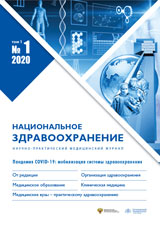
The National Health Care (Russia)  journal is a peer-reviewed scientific and practical medical journal founded in 2020 by the Ministry of Health of the Russian Federation and the I. M. Sechenov First Moscow State Medical University (Sechenov University).

Chief Editor is Mikhail Murashko, Dr. of Sci. (Medicine), Professor, Minister of Health of the Russian Federation.

Publisher of the Journal: First Moscow State Medical University (Sechenov University).

The National Health Care (Russia) journal is intended for specialists in the field of organization and management of healthcare and publishes original research articles and reviews that contribute to topical issues of organization and management of healthcare, medical education, epidemiology, public health, sociology of medicine, medical and social expertise and rehabilitation.


On the basis of recommendations of the Higher Attestation Commission of the Ministry of Education and Science of Russia the "National Health (Russia)”  journal is included in the List of peer-reviewed scientific editions in which the main scientific results should be published for the degree of Candidate and Doctor of Sciences on specialty
3.2.3 Public health, organization and sociology of health care, medical and social expertise (medical sciences).


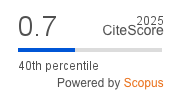
The Journal is included in the Russian Index of Science Citation(RISC) database and is in the Scopus database (since 2024).


The National Health Care (Russia) journal is committed to highlighting high-quality original research that demonstrates the best healthcare practices in the regions of the Russian Federation in the field of healthcare organization.
The concept of the journal is the creation of a platform for an open discussion on the organisation and management of healthcare in order to consolidate the professional medical community.
The journal presents the current status of the regulatory framework of the Russian healthcare system.
 
Key words: healthcare organisation, public health, medical education, personnel policy in the healthcare system, healthcare information support, medical insurance, specialised medical care, high-tech medical care, palliative care, primary health care, emergency medical care, medical and demographic indicators, information and communication technologies in health care, statistics in health care.


Mass media state registration certificate  PI No. FS 77-80206 dated January 19, 2021, issued by the Federal Service for Supervision of Communications, Information Technology and Mass Media (Roskomnadzor).

Current issue

Vol 6, No 4 (2025)
View or download the full issue PDF (Russian)

PUBLIC HEALTH

5-13 69
Abstract

Current research lacks a comprehensive analysis of the complex relationship between various factors, particularly socioeconomic and medical, and the decision-making process to seek immediate admission to healthcare facilities.

Aim. To identify behavioral patterns among citizens of the Russian Federation when facing medical issues and the factors influencing them.

Materials and methods. A specially designed questionnaire was used to assess citizens’ behavior in response to medical problems, including sections on respondents’ general characteristics (12 questions) and aspects of healthcare provision (17 questions). Statistical analysis was performed using Statistica for Windows 10.0, Stata, and R-Studio.

Results. The study involved a sample of 2,717 respondents aged 18 and over from 85 regions of the Russian Federation. The median age of the participants was 42.4 years. The majority of respondents (64.8 %) reported seeking professional medical help when health issues arose, which was characterized as rational health behavior. Approximately one-third (29.4 %) preferred self-treatment using pharmaceuticals and “folk remedies”, while 4.5 % took no action, believing the illness would “resolve on its own”. A small proportion (0.6 %) sought assistance from individuals practicing non-traditional methods. These latter three patterns were classifi ed as irrational health behavior. The highest proportion of respondents demonstrating irrational healthcare-seeking behavior was observed among individuals aged 35–44, those with low fi nancial status, never-married individuals, the unemployed, and those unwilling to have children. Medical factors contributing to irrational behavior included distrust in the healthcare system and low adherence to treatment and disease prevention. A high level of satisfaction with the most recent visit to a healthcare facility was identified as a factor promoting rational healthcare-seeking behavior.

Conclusion. The medical and socio-economic factors associated with rational healthcare-seeking behavior identified in this study are modifiable by the healthcare system and hold value for developing interventions aimed at promoting appropriate medical care utilization.

14-22 54
Abstract

Regional differences in living conditions can affect human health, which must be taken into account when solving a wide range of practical health problems. In Russia, the impact of a set of regional conditions on public health indicators has not been assessed within the framework of unifi ed methodological approaches over a long period of time.

Aim. To analyze associations of total mortality with regional indices in the period 2005–2022, with an assessment of the impact of the COVID-19 pandemic.

Materials and methods. Four regional indices characterizing the territories of Russia in 2005–2022 from socio-economic, demographic and industrial-ecological positions were used as living conditions of the population. Total mortality rates for the same period were obtained from the official website of the Federal State Statistics Service. To assess the associations, linear regression was used, adjusted for the medical and organizational characteristics of the regions.

Results. In the vast majority of the analyzed years, total mortality is statistically significantly associated with demographic and socio-economic, but not with industrial and ecological living conditions in the regions. The strongest inverse associations are demonstrated by the Demographic Index, an increase in which by 1 unit statistically signifi cantly reduces the total mortality rate by 2–3 units. During the COVID-19 pandemic, in 2020–2021, there was an increase in the associations of the Demographic and Economic indices, with a subsequent return to pre-COVID values  in 2022. The identified trends are characteristic of both quantitative and qualitative presentation of regional indices, as well as with a shift (lag) of the indicators under consideration.

Conclusion. The study allowed us to state long-term stable associations of demographic, economic and social regional characteristics with total mortality. A significant change in the strength of associations of regional indices with total mortality in 2019–2021 characterizes the COVID-19 pandemic as a powerful public health factor.

23-34 66
Abstract

Complex mechanisms of the impact of environmental conditions on the human body require research, whose profi le is subject to constant changes under the influence of various factors.

Aim. To build a network structure and conduct a mathematical analysis of modern domestic research in the field of studying the health of people engaged in shift work.

Materials and methods. The object of the study is original domestic studies published over the past five years and posted in the eLibrary database. At the first stage, a search and formal-logical assessment of the studies were carried out. At the second stage, network analysis based on graph theory was used for visualization and mathematical analysis. The elements were laid out according to the selected algorithm with an original shiftscheme for better optimization of the distance between the outer and central nodes. After iterations using the “directed forces” method, a graph in the minimum energy state was obtained.

Results. The profile of the economic sectors, the health of whose employees was analyzed in the studies, reflects the structure of economic activity in the territories where the shift work method is actively used. The constructed network of 53 nodes and 166 edges can be characterized as unoriented, homogeneous, without spatial reference. The average degree of the constructed graph is 3.132, the global clustering coefficient is 0.631, and the average shortest distance is 3.074. In the presence of several sufficiently remote connected nodes, the average shortest distance in the graph was 3.074, and the total path length was 466.369.

Conclusion. The construction of an undirected homogeneous non-dense graph made it possible to identify four key areas of modern domestic research: the functioning of the cardiovascular system, adaptation mechanisms, nutritional features, and the organization of medical care in the context of the spread of the new coronavirus infection COVID-19. These areas, with sufficient isolation of scientific research, have a number of patterns-bridges: gender aspects, blood homocysteine levels, nutritional status, and shiftduration.

PROBLEMS OF SOCIALLY SIGNIFICANT DISEASES

35-44 55
Abstract

Breast cancer (BC) is the most common type of cancer among women worldwide.

Aim. The objective is to assess the dynamics of regional standardized death rates (SDR) from breast cancer among women in Russian regions over a tenyear period, including taking into account the COVID-19 pandemic.

Materials and methods. Rosstat data for 2014–2023 on the average annual population and the number of deaths in one-year age groups in the constituent entities of the Russian Federation. The calculations were performed using the computer program “Calculation and analysis of mortality rates and years of life lost due to premature mortality in the constituent entities of the Russian Federation”.

Results. In general, in Russia, the SDR from breast cancer among women decreased annually, and decreased by 16.7 % over 10 years. In 5-year age groups, mortality rates under 80 decreased, but increased at the age of over 80 (in 2020–2022 compared to 2019). The average regional SDR was 21.17 ± 3.87 per 100 thousand women in 2019 and 17.19 ± 3.04 in 2023. In 2023, the SDR was lower in 75 regions than in 2014, but an annual decrease in the SDR compared to 2014 was noted only in 26 regions (in the rest, unstable dynamics). The region in which the SDR from breast cancer was higher annually than in 2014 is the Novgorod region. The increase in SDR in 2020 against the backdrop of the COVID-19 pandemic compared to 2019 occurred in 28 regions and in 4 regions the SDR from breast cancer in 2023 was higher than in 2019.

Conclusions. In most regions over a ten-year period, the SDR from breast cancer decreased, the COVID-19 pandemic led to a small short-term increase in SDR in some regions.

ACTUAL ISSUES OF MEDICAL EDUCATION

45-54 57
Abstract

Digitalization as the main trend in the transformation of the healthcare system poses an urgent task a change in the basic approaches to the training of medical specialists, whose main training order is formed by government authorities. The modernization of student training should be reflected not only in the planned enrollment figures, but also in the essential changes in competencies anchored by state educational standards for medical specialties.

Aim. Assessment of digital competencies of medical students and their readiness for professional activities in the context of the digital transformation of healthcare.

Materials and methods. A remote survey was conducted using the DigCompSAT methodology, adapted by the author’s blocks, which make it possible to assess students’ digital readiness to solve professional problems and use artificial intelligence (AI) in the field of healthcare. A total of 269 respondents took part in the survey – students of Saratov State Medical University specializing in medical treatment, representing 21 subjects of the Russian Federation.

Results. The assessment of students’ readiness to implement digital professional competencies and use information technologies demonstrated that a signifi cant portion of the surveyed students have an advanced level of knowledge about the capabilities of the Unifi ed Portal of State Services (44 % know well and 14 % have deep knowledge). 35 % of students demonstrated an advanced level of knowledge about the implementation of the federal project “Creation of a single digital circuit in healthcare based on a unified state information system in the field of healthcare”, 41 % have a general idea. In the medical field of using AI, 45 % of students indicated an advanced level, however, only 33 % and 34 % of respondents, respectively, are well acquainted with the theory and practice of using AI and know positive examples of its application. 44 % of respondents have a basic level of understanding of the use of AI in healthcare, and 11 % know nothing about it.

Conclusion. To achieve digital readiness of the healthcare system, special attention must be paid to the formation of both universal and professional digital competencies.

INFORMATIZATION OF HEALTHCARE

55-63 82
Abstract

Modern machine learning methods open new opportunities for analyzing medical texts. The use of unstructured data enables improved clinical decision support and the development of personalized patient treatment approaches.

The aim of the study: to develop an optimal algorithm for disease prediction using multi-label classification based on medical texts from selected patient treatment cases.

Materials and methods. The study utilized anonymized electronic medical records of 387 590 patients. Textual data were processed using lemmatization and vectorization based on a pretrained FastText model. A multi-label classification model was developed to predict 156 diagnostic categories grouped by major disease classes. Neural network architectures and decision tree ensembles were applied for model building.

Results. The proposed models demonstrated high effectiveness. The use of various text vector aggregation methods improved prediction quality. The model showed stability and clinical interpretability, supporting its applicability in real-world medical practice.

Conclusion. The developed approach to analyzing unstructured medical texts using machine learning methods is a promising tool for disease diagnosis support. Further research will focus on improving model interpretability and adapting models to diverse clinical data sources.

Announcements

2025-10-15

Уважаемые коллеги!

Вышел в свет юбилейный номер журнала «Национальное здравоохранение»!

В преддверии своего 5-летнего юбилея журнал в очередной раз подтвердил свой статус: вошел во 2 квартиль (Q2) международной наукометрической базы Scopus и отнесен к 1 (высшему) уровню Единого государственного перечня научных изданий (ЕГПНИ).

Такое продвижение журнала говорит о неослабевающем интересе и признании профессиональной аудитории и, несомненно, будет способствовать развитию медицинской науки и прогрессу в области здравоохранения.

More Announcements...


Creative Commons License
This work is licensed under a Creative Commons Attribution 4.0 License.